 Skip to content


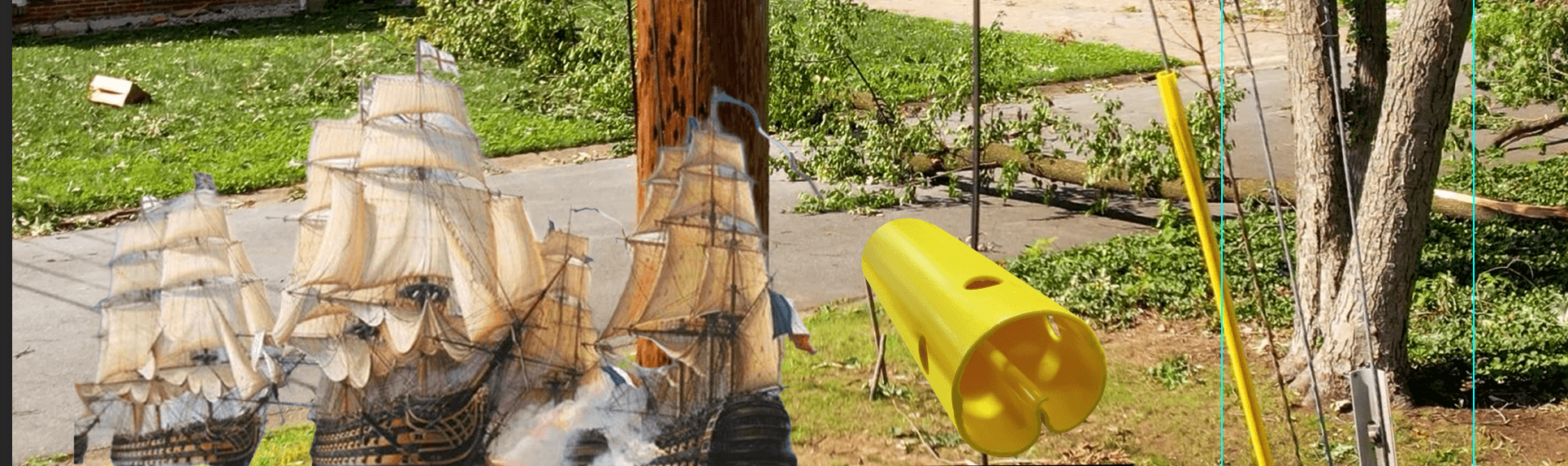
Why are they called “guy wires”? Meet our newest product and learn some nautical trivia
This article originally appeared in our “Movie Monday” LinkedIn newsletter.
We have an exciting new product to introduce this week [insert drum roll] …
What makes them innovative is right there in the name: they were designed to make installation easy. Traditional guy wire markers can be awkward to install, often requiring multiple people, tools, and a fair amount of patience.
EZ-Guy Wire Markers simplify the process dramatically. A single worker can install one in under a minute, with no hardware and no hassle. The markers fit guy wires up to ¾”, are built from durable HDPE thermoplastics, and are designed to withstand harsh outdoor environments—from -40°F winters to 150°F summer heat.
They’re highly visible, built for long-term durability, and help prevent accidental contact with guy wires by pedestrians, equipment operators, and vehicles.
In other words: safer infrastructure that can be installed faster.
But while working on this product launch, I found myself wondering something slightly different…
Where did the term “guy wire” come from?
At first, the internet tried to convince me it had something to do with Guy Fawkes, the infamous English conspirator from the Gunpowder Plot of 1605. According to the story, the ropes used on execution devices supposedly gave rise to the term.
It’s a great story.
Unfortunately, it’s also not true … damn you, internet!
The real origin is far less dramatic but still interesting. The word comes from the Dutch nautical term “gei”, which referred to ropes used to control sails and spars on ships. Over time, English sailors adopted the term “guy” to describe ropes used to stabilize masts and other structures. When engineers later needed a term for tensioned support cables holding up towers and poles, the name stuck.
And that’s one more reminder of how much of our everyday language comes from life at sea.
Earlier this year I made a resolution to read more, and I just finished The Wager by David Grann, a fantastic true story of shipwreck, mutiny, and survival in the 1700s. Highly recommend it. One thing the book reminds you of is how much maritime culture shaped our language.
Here are a few common phrases we still use today that began on the decks of sailing ships:
“Cut and Run” 🏃
When sailors needed to escape danger quickly, they sometimes cut the anchor line rather than take the time to haul it up. The ship could immediately “run” before the wind.
Meaning today: Leave quickly, often abandoning plans. My wife and I’s favorite strategy for leaving parties and events.
“Show Your True Colors” 🏴
Warships sometimes sailed under false flags to approach enemies unnoticed. Before battle, they would raise their true national colors. The same origin for the term “false flag”.
Meaning today: Reveal your real intentions or character.
“By and Large” ⛵️
This one phrase comes from sailing directions.
- By meant sailing close to or into the wind.
- Large meant sailing with the wind.
A ship that handled well “by and large” could sail effectively in either condition.
Meaning today: Generally speaking.
“Hand Over Fist” 👊
Sailors hauling rope could pull hand over hand, moving quickly up a line or hauling sails rapidly.
Meaning today: Rapid progress or quick financial gain. We strongly believe at Trident that if you invest in safety, you’ll be sure to make money hand over fist!
“Toe the Line” 🫡
On Royal Navy ships, sailors stood for inspection with their toes touching a seam in the deck planks, literally “toeing the line.”
Meaning today: Follow rules or authority.
“Three Sheets to the Wind” 💨
The “sheets” on a ship are the ropes controlling sails. If several came loose, the sails would flap wildly and the ship would stagger unpredictably.
Meaning today: Very drunk.
“Pipe Down” 🪈
A boatswain used a whistle, called a pipe, to signal lights out and quiet time on ships.
Meaning today: Be quiet. My wife is no stranger to using this one on me …
“Loose Cannon” 💣
A cannon that broke free during battle could roll across the deck causing chaos and destruction.
Meaning today: Someone unpredictable and dangerous. Nothing worse than when you find a loose cannon three sheets to the wind!
So the next time you hear the phrase “guy wire,” remember that the word traces back hundreds of years to the age of sail, when ropes kept towering masts standing just like guy wires keep towers and poles standing today.
Thankfully, installing the markers on them is a lot easier now.
And with EZ-Guy Wire markers, it takes less than a minute.