 Skip to content


What Should Be Included on a GHS Label?
Signal Word
GHS label requirements specify that a single word, either “Danger” or “Warning,” be used to identify the hazard class of chemicals and other dangerous products. “Warning” indicates less severe hazard risk. “Danger” indicates severe hazard risk.Pictogram(s)
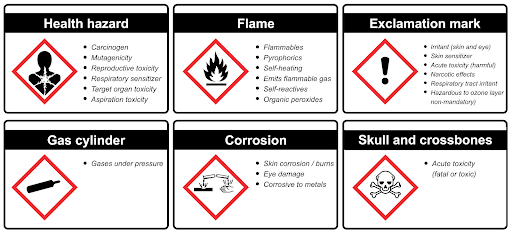
Found in many other places besides labels compliant with GHS, pictograms are universally readable symbols illustrating the dangers of exposure to hazardous chemicals. (Pictograms are also used to connect GHS-compliant labels to safety data sheets (SDS), which are quick-reference summary documents providing information about the hazards of a product and advice about safety precautions.) Pictograms must be used to identify each hazard individually, meaning that multiple pictograms may need to be used. You may recognize these red triangular symbols from other places in your everyday life, such as on cans of spray paint in the hardware store or on biohazard warning signs at the doctor’s office.Hazard Statement(s)
Hazard statements are GHS label requirements that explain the degree of danger of the chemical or product, as well as potential symptoms that may occur among those who have had contact with it. Depending on the number of risks that might be posed to workers and users, multiple hazard statements should be included if necessary.Important note
These first three GHS label requirements (signal word, pictograms, and hazard statements) must always be grouped together. The remaining three GHS label requirements can be placed in different locations on the label and have no specific required order.Product Identifier/Ingredient Disclosure
“Product identifier” and “ingredient disclosure” are sometimes used interchangeably. Whichever name is used, this GHS label requirement is often placed in the top left-hand corner of the label. It identifies the specific hazardous chemicals and/or ingredients in the product. This section also typically includes state name, batch number, code number, or other relevant information that allows for quick, simple identification of the chemical.Supplier Information
Supplier or manufacturer information is another GHS label requirement. This must include the name, address, and telephone number of the supplier or manufacturer who produced the chemical. It can also contain additional contact information such as the company’s website, relevant email addresses, and more.Precautionary Statement(s)
All GHS labels must include at least one precautionary statement. A precautionary statement is a short instructional paragraph about how people can minimize exposure to the chemical to reduce the risk of potential hazards. As of January 2022, there are four categories of precautionary statements:- Storage statements explain the storage requirements for the chemical
- Prevention statements give instructions on minimizing exposure
- Response statements outline proper response procedures in case of exposure
- Disposal statements inform users on how to dispose of the chemical properly